
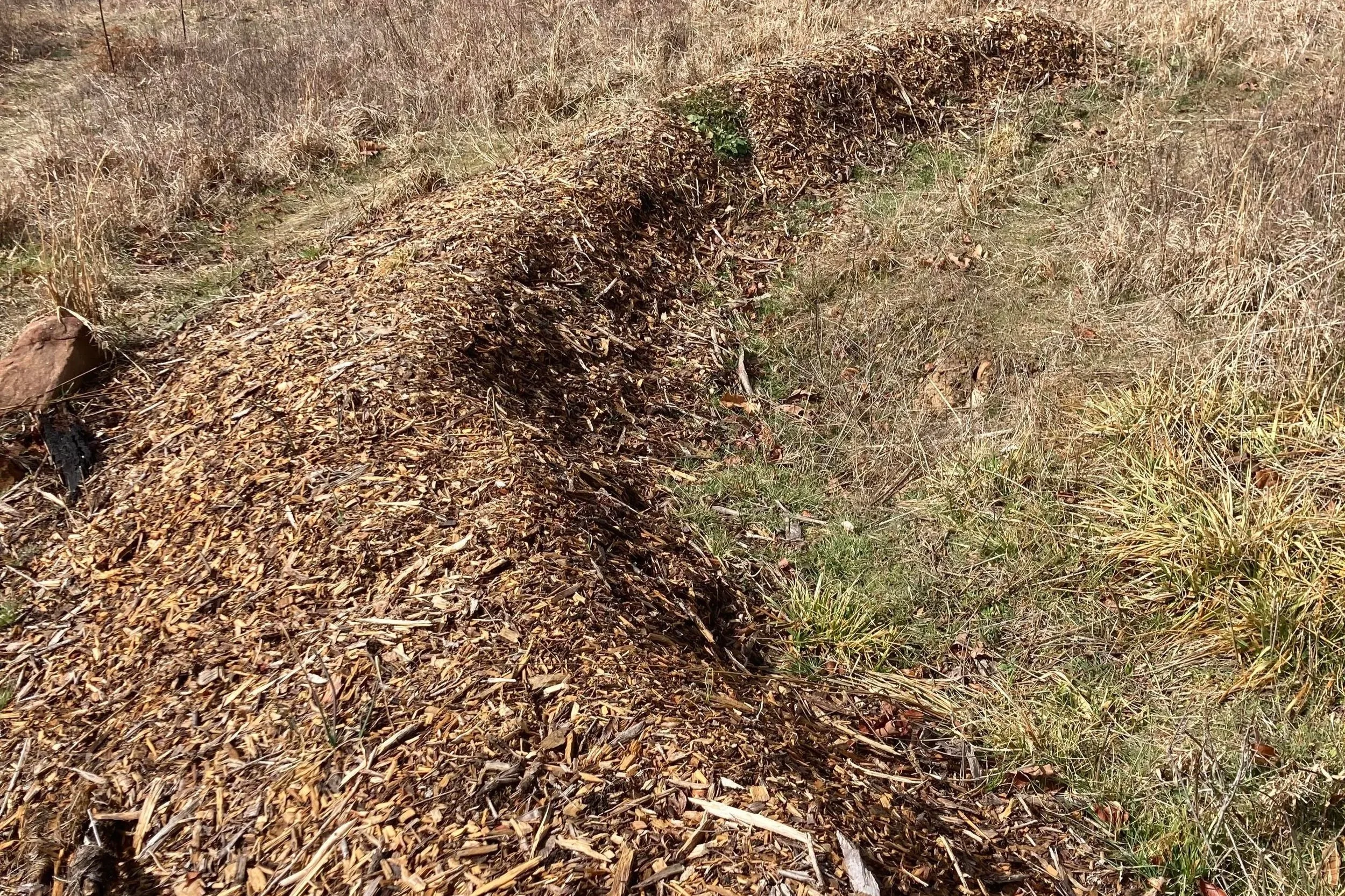
A Trend toward drier summers
Our farm is located is located in the East-Central Missouri, a region that averages around 44 inches of annual precipitation. Overall, this is an adequate amount of rainfall but we’ve noticed an emerging trend for a rising portion of this moisture to be deposited in large weather events during the spring months. This is offset by increasingly hotter and drier summer months.
This shifting of precipitation events creates many new challenges for local farmers, including requiring more time, energy, and resources spent irrigating during the summer months. If the climate predictions hold true, more and more existing local irrigation systems will reach the limit of their ability to maintain proper field moisture, whether a consequence of financial non-viability or, as in our case, the physical limitations of the available water sources.
Luckily, central Missouri is still receiving a sufficient quantity of rainfall; suggesting that an answer to drier summers may lie in passively capturing the water deposited during heavy spring deluges and slowly releasing that moisture as precipitation wanes. Hügelkultur may provide a solution.
Hügelkultur is a horticultural technique in which a mound constructed from decaying wood debris and other biodegradable plant material is planted as a raised bed. This technique is often praised in the permaculture community for its ability to slowly release nutrients into the soil as its components decay and for its water-holding qualities. If hügelkultur beds can be proven to hold significant amounts of moisture from large influxes of precipitation, they would be a valuable component in local farmer’s climate adaptation toolkit.
For the past year, we’ve partnered with the Sustainable Agriculture Research and Education (SARE) program to test the moisture retention capabilities of hügelkultur. Our hope was to determine if hügelkultur could provide a low cost, environmentally sustainable solution to the irrigation challenges faced by us and other local farmers.
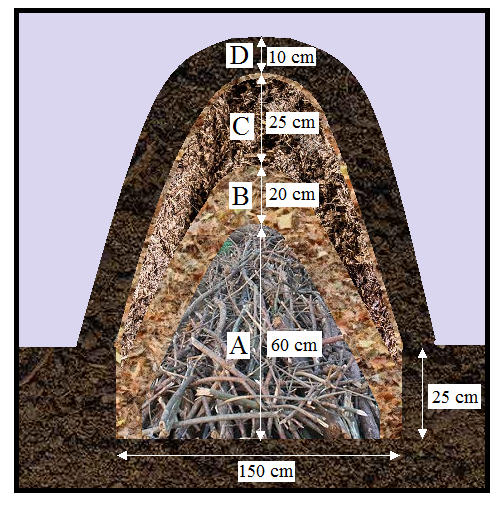
Hugekultur Cross Section By Kiss Veronika
METHODS
Six test sites were constructed, methodically saturated, and monitored to track moisture levels. These six sites consisted of two hügelkultur beds assembled on the field’s surface, two hügelkultur beds whose base was set nine inches below the field’s surface, and two regular raised beds to serve as the control group. All six sites were covered with three inches of wood chip mulch.
Moisture levels were quantified with the use of tensiometers and the collection of gravimetric water content data from soil samples.
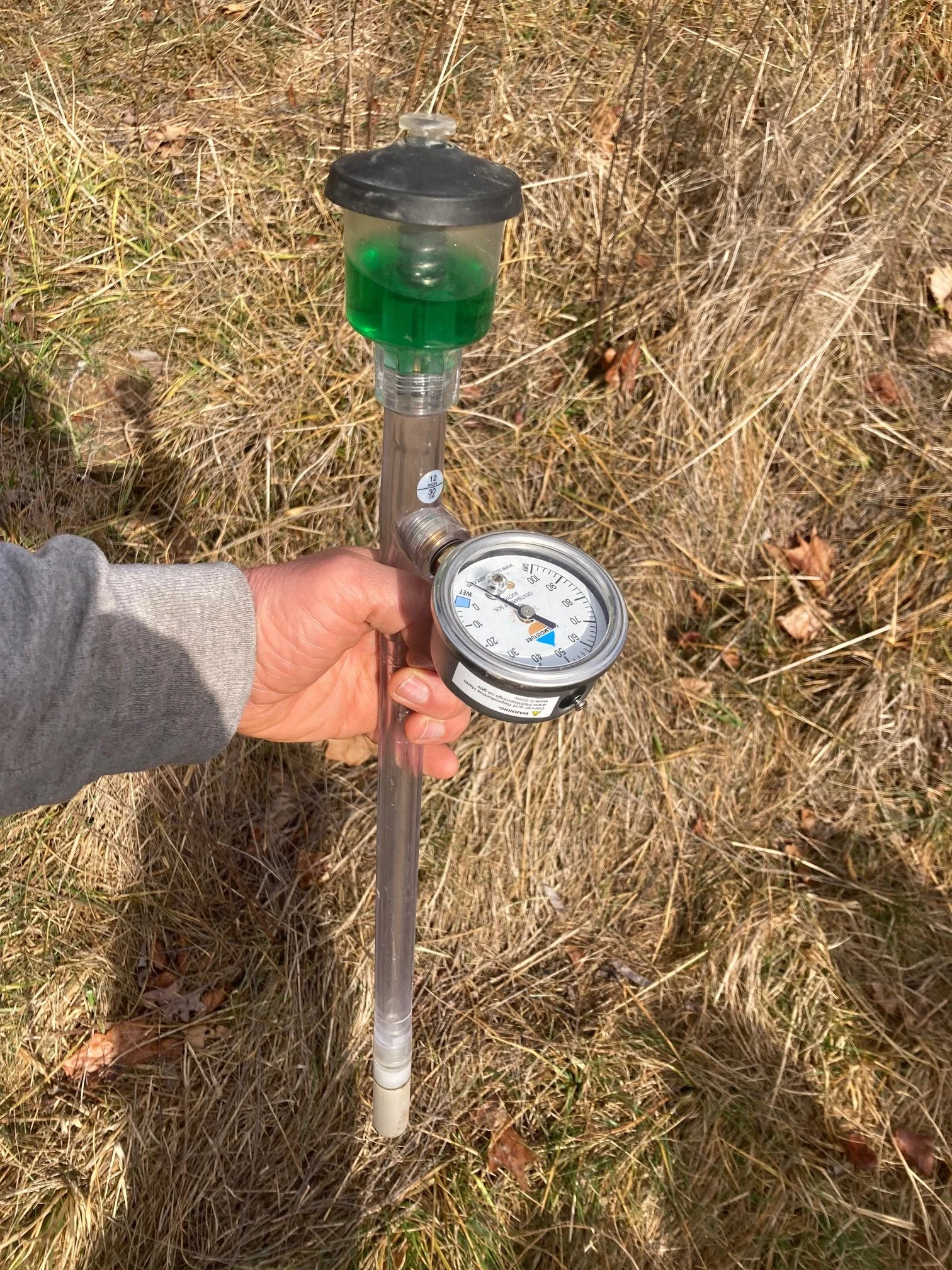
Each test site was monitored with a tensiometer. When in operation, the ceramic tip located on the unit’s lowest point was buried to a depth of ten inches. Data collected in this way told us what the moisture levels were closer to the hügelkultur’s buried biomass. The tensiometer in this picture has been emptied and would normally be entirely filled with distilled water which has been colored green to aid in monitoring the water level.
Gravimetric water content is the ratio of the mass of water in a soil sample to the mass of that sample after it has been completely dried. Basically, by heating a soil sample for 24 hours, the resulting weight can be compared to its initial wet weight and tell us how much of the sample was water. This value is usually expressed as a percentage, with larger numbers indicating wetter soils. Soils containing large quantities of organic matter or clay may produce results exceeding 100%.
Tensiometers consist of a sealed tube filled with water, a porous ceramic, and a gauge for measuring soil tension in kilopascals (kPa). They are inserted into the ground to the desired depth and left in place for the growing season.
Tension is a negative pressure created when water is pulled from the tensiometer’s buried ceramic tip into the surrounding soil. The drier the dirt, the more water is drawn out, resulting in a higher kPa reading. A reading between 10-30kPa is ideal, while higher numbers indicate increasing dry stress to the effected crop.
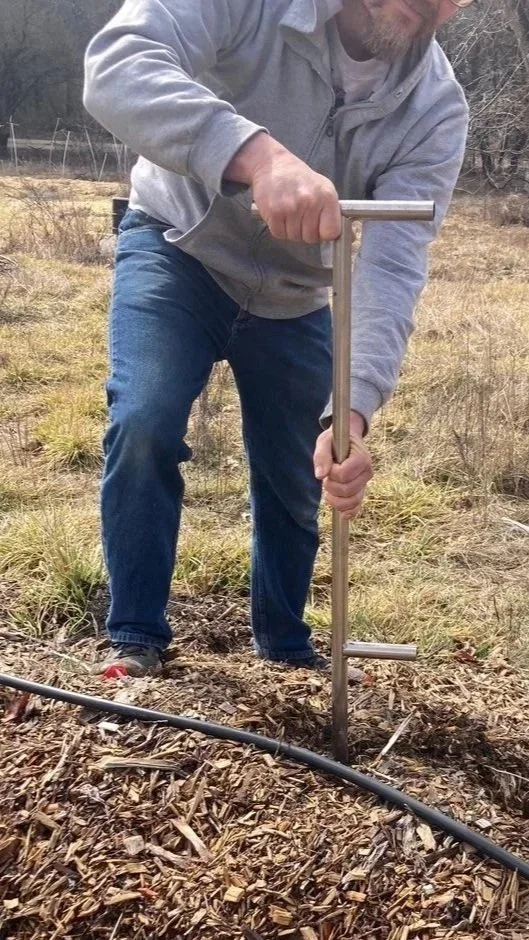
A soil probe was used to collect samples to a depth of 5 inches. The resulting gravimetric data provided insights into the hügelkultur’s ability to supply moisture to the bed’s surface.
RESULTS
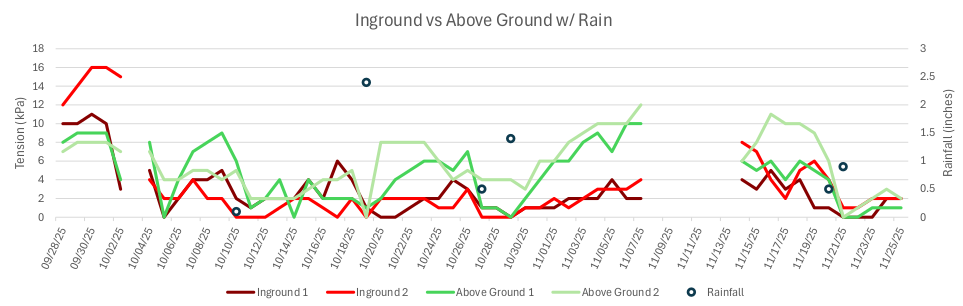
After gathering and processing all the data, we were excited to see some marked differences between the hügelkultur beds and the control beds. The tensiometer readings, shown in these graphs, indicate that at a depth of ten inches both types of hügelkultur maintained a high moisture content. The control beds, in contrast, rapidly lost moisture and reached ranges of soil tension that would have stressed plantings.
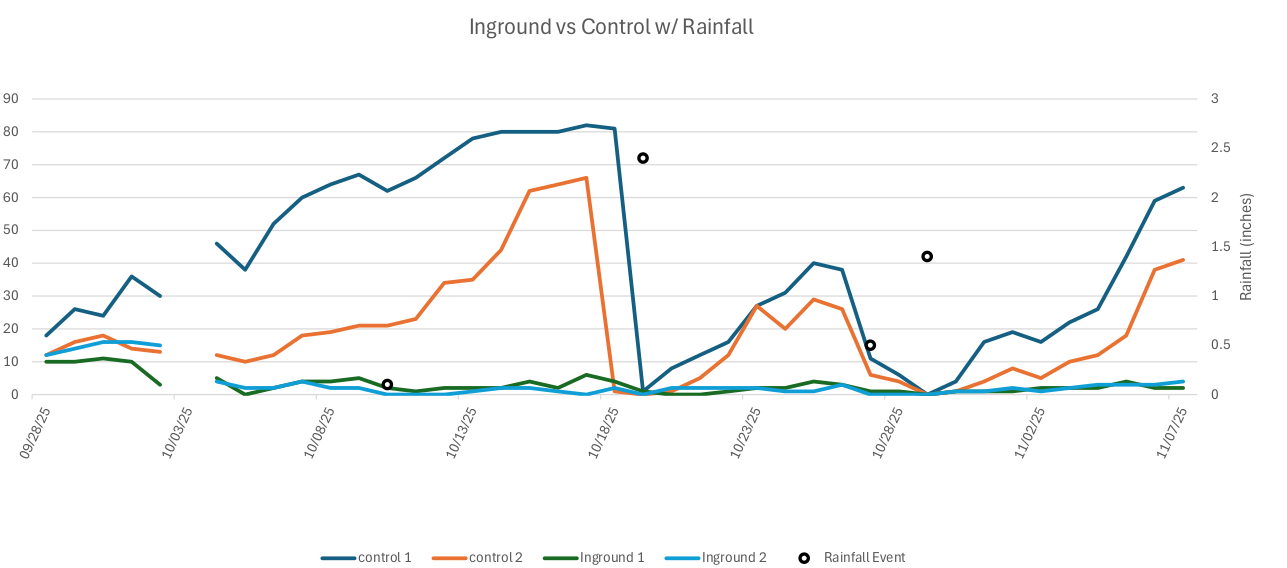
In this graph showing tensiometer readings, a higher line indicates more soil tension and thus a drier soil. The gap in data on 10/3 was caused when the tensiometers had to be reset.
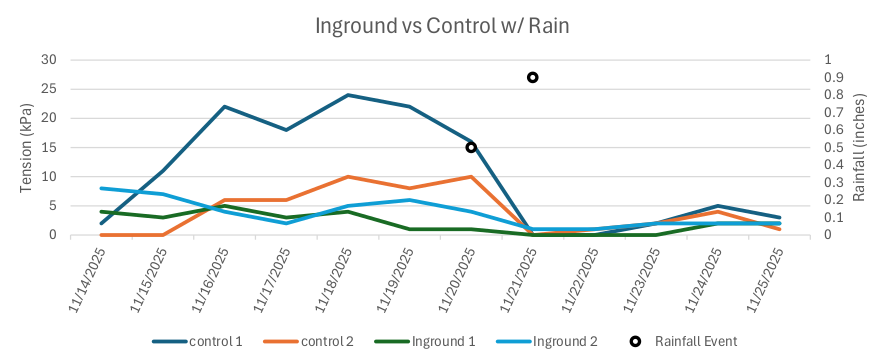
This graph continues the data presented in the previous graph. The one week gap between the two sets of data is due to temperatures dropping below freezing, preventing the function of the tensiometers.
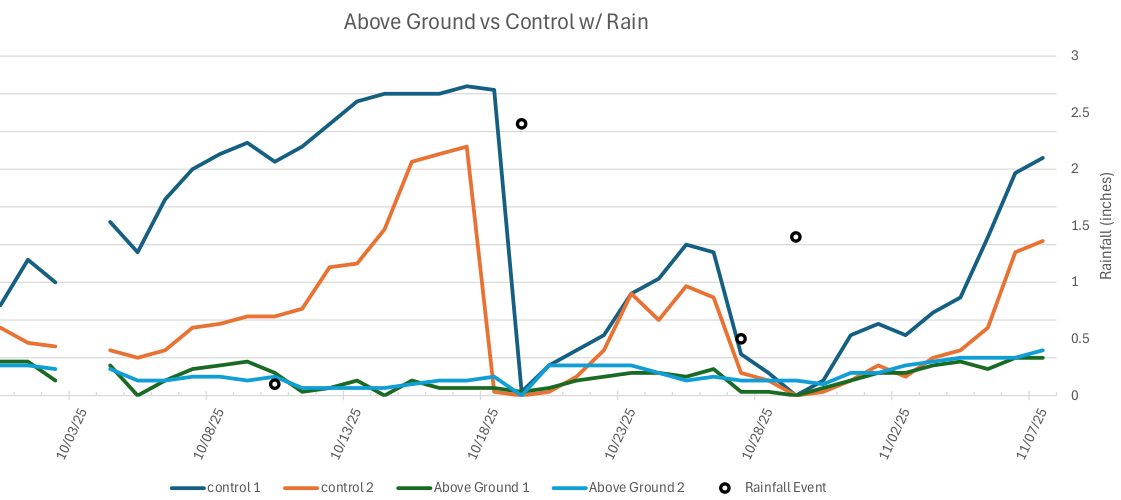
In this graph showing tensiometer readings, a higher line indicates more soil tension and thus a drier soil. The gap in data on 10/3 was caused when the tensiometers had to be reset.
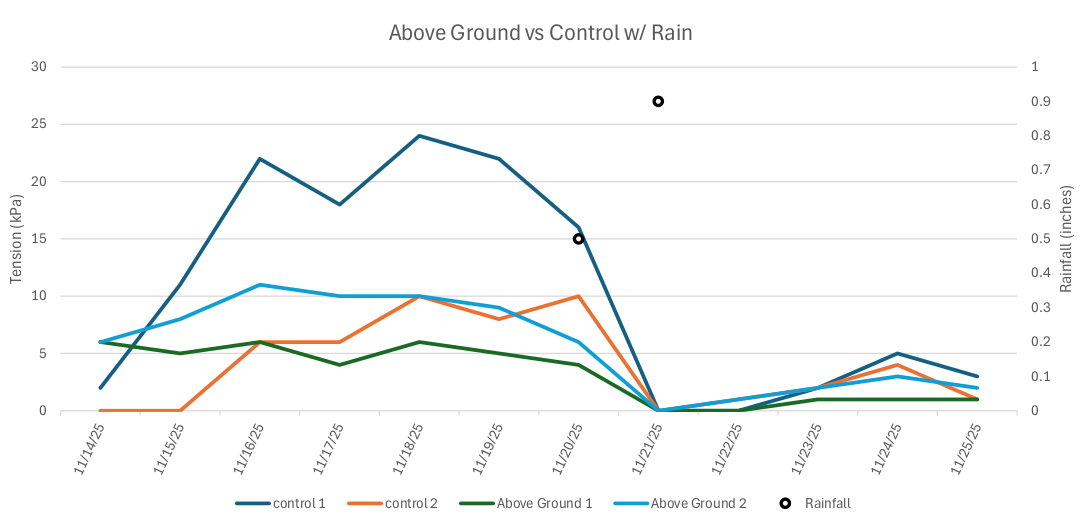
This graph continues the data presented in the previous graph. The one week gap between the two sets of data is due to temperatures dropping below freezing, a condition that would have damaged the tensiometers.
Our gravimetric water content data was less conclusive. While it shows that the test sites with the best water retention were consistently hügelkultur sites, it also indicates less of an overall distinction between the hügelkultur and control beds.
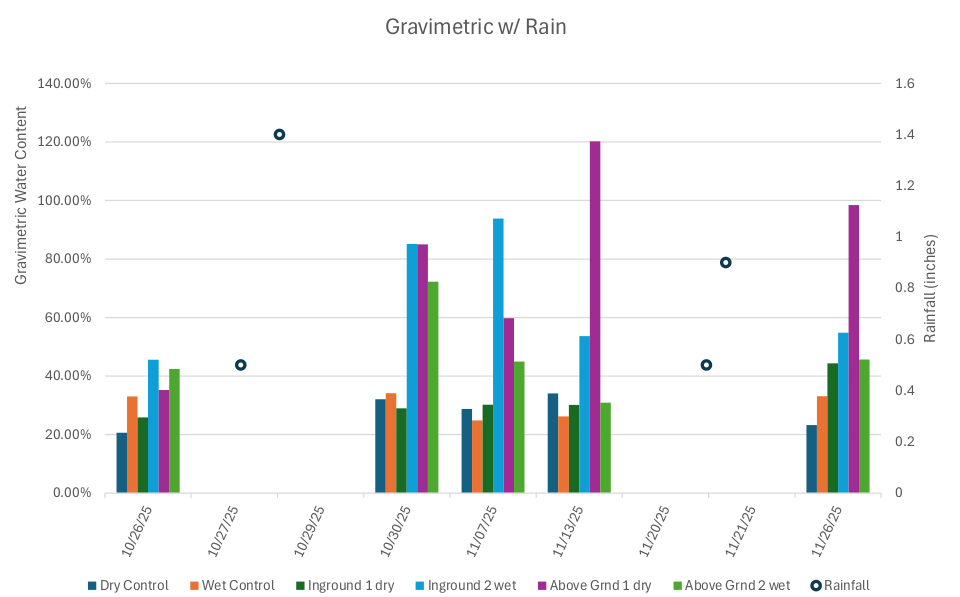
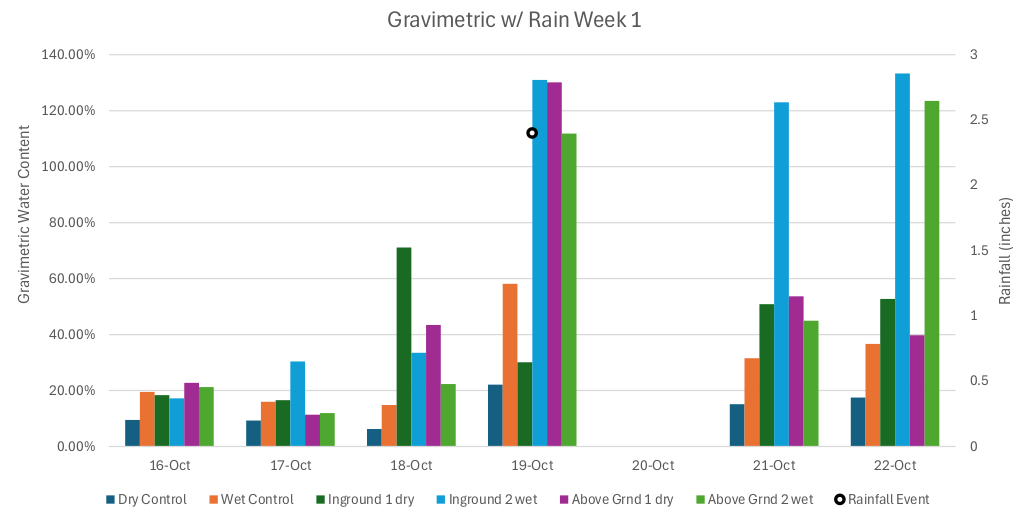
When comparing the tension readings of the two types of hügelkultur, they appear to have performed similarly. The hügelkultur sites whose bases were sunk nine inches into the ground seem to have a slight advantage in water retention but both types maintained a level of moisture adequate for healthy plant growth.
conclusions and implementation
This study revealed a nuanced picture of hügelkultur’s strengths. While the tension data clearly indicated that moisture was held deeper in the mounds, the gravimetric data showed that that water was not necessarily available at the surface. This may mean that hügelkultur will benefit perennial and established crops with deeper root penetration but seedlings and transplants will require an irrigation regimen similar to non-hügelkultur beds.
That being said, we found the results of this study very promising and are in the process of converting our existing raised beds into hügelkultur beds. We are aiming to transform five farm plots each year for the next five years. As we are already committed to a no-till agricultural system, this transition will have a limited effect on our growing techniques.
Based on the data collected, we feel confident that hügelkultur, at the very least, will capture excess rains during our exuberant springs and reduce our need to irrigate through the following months. Maybe more benefits will be revealed in the years to come!